Home » Archive

Articles in the Medicine Category

Medicine »

[6 May 2012 | One Comment | ]

Diseases which result in Charcot’s joint (neuropathic joint) are:

Diabetes mellitus
Tabes dorsalis
Leprosy
Amyloidosis
Syringomyelia
Meningomyelocele
Peroneal muscular atrophy

Medicine »

[5 May 2012 | No Comment | ]

Causes of exudative pleural effusion are:

Neoplasms
Pulmonary embolism
Infections
Collagen vascular disorders
GIT disorders – Perforation of esophagus, pancreatitis
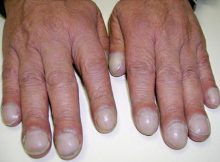
Others – Yellow nail syndrome, Uremia, Meig’s syndrome, After cardiac surgery / injury, Pericardial disease, Asbestos exposure, Radiation exposure, Chylothorax

Cardiology, Medicine »

[3 May 2012 | No Comment | ]

ECG changes in hyperkalemia are:

Peaking of T waves
Increase in PR interval (AV conduction delay)
Wide QRS complex
Loss of P waves

Cardiology, Medicine »

[3 May 2012 | No Comment | ]

ECG changes in acute pericarditis are:

ST elevation with concavity upward
T inversion occurs after some days (once ST segment returns to baseline)
No change in QRS complexes (decrease in QRS voltage may occur in massive pericardial effusions)
PR segment depression (due to atrial involvement)
Atrial premature beats, atrial fibrillation

AIPGMEE 2012, Clinical medicine, Medicine »

[13 Apr 2012 | No Comment | ]

Some conditions causing massive splenomegaly are:

Chronic myeloid leukaemia
Chronic lymphocytic leukemia
Hairy cell leukemia
Myelofibrosis
Polycythemia vera
Autoimmune hemolytic anemia
Sarcoidosis
Gaucher’s disease
Diffuse splenic hemangiomatosis

Medicine, Neurology »

[3 Apr 2012 | No Comment | ]

Hydrocephalus
Seizures
Cranial nerve involvement
Subdural effusion
Subdural empyema
Cerebral herniation due to increased intracranial tension

Medicine »

[22 Jan 2012 | 4 Comments | ]

Statins are usually taken before going to sleep. This is because the hepatic synthetic activity is maximum at night. Hence statins have maximum efficiency in decreasing cholesterol when given at night. This is especially important in statins with short half life such as simvastatin. Newer statins like atorvastatin have a longer half life.
Other drugs which block the hepatic synthetic function (eg: warfarin which blocks hepatic synthesis of clotting factors) are also best given at night time.

Medicine »

[22 Jan 2012 | 2 Comments | ]

Warfarin exerts its anticoagulant action by interfering with the vitamin K mediated synthesis of clotting factors in the liver. Hepatic synthetic function is maximum at night. So warfarin has maximum action when it is given at night. Other drugs which block the hepatic synthetic function (eg: statins are used to block cholesterol synthesis) are also best given at night time.

Medicine »

[22 Jan 2012 | No Comment | ]

Digoxin has a long half life. Hence to prevent cumulative toxicity, it is given for 5 days every week. The next course of digoxin is started after a gap of 2 days. Because of its peculiar dosage schedule, it is easy to ask for intake of digoxin by carefully taking the treatment history.

Medicine »

[17 Jan 2012 | No Comment | ]

Phaeochromocytoma
Hyperthyroidism
Hypothyroidism
Hyperaldosteronism (Conn’s syndrome)
Cushing’s syndrome
Acromegaly
Hyperparathyroidism